


17 Jun The Evolution of Collectible Dutch Photography: A Contemporary Trend Analysis
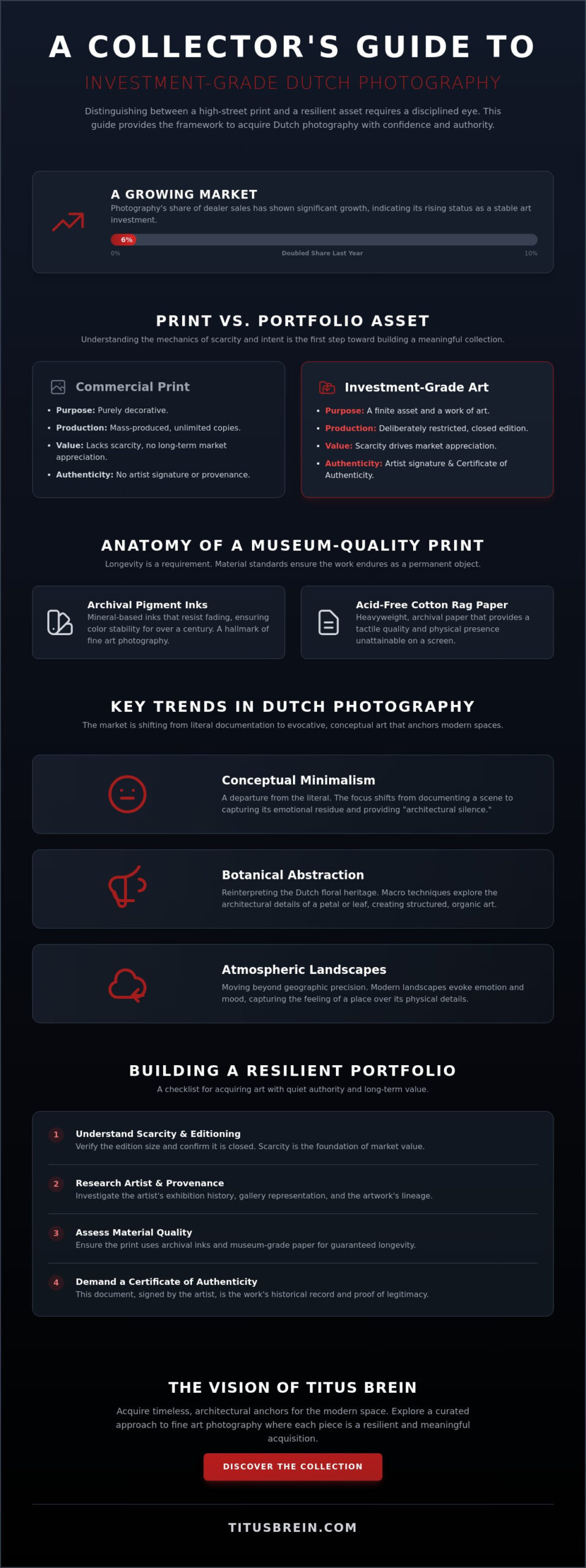
Photography doubled its share of dealer sales to 6% last year. Yet, the path to building a meaningful collection remains shrouded in technical ambiguity. You likely recognize the atmospheric power of a curated image. Distinguishing between a high-street print and investment-grade collectible dutch photography requires a disciplined eye. With the Dutch VAT rate for art objects recently rising to 21%, selecting works with enduring value is now a matter of precision. It’s no longer enough to observe. One must understand the provenance and the craft.
This analysis clarifies the emerging trends and investment potential of contemporary limited edition Dutch art. You’ll learn to identify the specific hallmarks of quality that ensure an artwork remains a resilient asset. We examine the shift toward conceptual minimalism. We look at the return to analog authenticity and the depth of cinematic storytelling. This guide provides the structural framework needed to acquire Dutch photography with confidence and quiet authority.
Key Takeaways
- Distinguish between commercial prints and investment-grade art by understanding the mechanics of scarcity and edition numbering.
- Recognize the enduring influence of Dutch Golden Age lighting on modern collectible dutch photography and its minimalist evolution.
- Uncover the contemporary preference for atmospheric landscapes and botanical abstractions that evoke emotion over geographic precision.
- Master the criteria for building a resilient art portfolio, from researching exhibition records to assessing gallery representation.
- Explore the curated approach of Titus Brein, where fine art photographic prints serve as timeless, architectural anchors for the modern space.
Defining the Value of Limited Edition Dutch Art
The distinction between a commercial print and a limited edition work of art is found in the intent. Mass-produced images serve a decorative purpose. They lack the scarcity that defines a true acquisition. In the world of collectible dutch photography, value is derived from the deliberate restriction of availability. When an edition is closed, the artist commits to never producing the image in that format again. This scarcity is the foundation of market appreciation. It transforms a visual record into a finite asset.
Collectible Dutch photography is a blend of technical precision and conceptual depth. It’s an intentional act of creation rather than a casual capture. Every piece carries the weight of its provenance. The artist’s signature serves as a physical seal of approval. It’s a direct link between the creator and the collector. This is usually accompanied by a certificate of authenticity. This document is not merely paper. It’s a historical record that anchors the work within the artist’s larger body of work, ensuring its legitimacy for future generations.
The Hallmarks of Museum Quality Prints
Longevity is a requirement for any serious collection. Archival pigment prints use mineral-based inks that resist fading for over a century. The choice of paper is equally critical. Heavyweight, acid-free cotton rag provides a tactile quality that digital screens can’t replicate. This physical presence is what institutions like the Nederlands Fotomuseum look for when evaluating contemporary acquisitions. They prioritize works that balance aesthetic innovation with rigorous material standards. A museum-quality print feels substantial. It’s a permanent object designed to endure within a private or public archive.
Photography as a Tangible Investment
Limited edition photography offers a stable alternative to more volatile media. In the Netherlands, the market for photographic art has shown remarkable resilience. High-end interior curation now treats the photograph as a primary architectural element. It’s no longer an afterthought. Historical data from international auctions suggests that Dutch photographic artists maintain strong secondary market performance. This is driven by a global appreciation for the Dutch visual heritage and its minimalist evolution. Collectors value the medium for its clarity. It bridges the gap between traditional fine art and modern innovation. As digital saturation increases, the value of a physical, limited-run print continues to rise.
Key Trends Shaping Contemporary Collectible Dutch Photography
Contemporary trends in collectible dutch photography reflect a departure from the literal. We see a movement toward the evocative. The focus has shifted from documenting a scene to capturing its emotional residue. This evolution is particularly evident in the Dutch market, where collectors increasingly seek works that offer architectural silence. Large-format minimalist pieces are now central to modern interior curation. They provide a focal point that doesn’t compete with the space but anchors it. It’s a deliberate choice for the discerning eye.
The current market values the conceptual over the descriptive. While historical archives often prioritized social significance, today’s acquisitions lean toward aesthetic longevity. This is why certain iconic Dutch photographs remain relevant; they possess a timeless quality that transcends their era. Modern collectors look for this same enduring power. They find it in works that balance heritage with a forward-looking vision. This vision often extends to commissioned portraits. These are no longer mere likenesses. They are conceptual explorations of identity, treated with the same artistic rigor as an exhibition piece.
Botanical Abstraction and the Floral Heritage
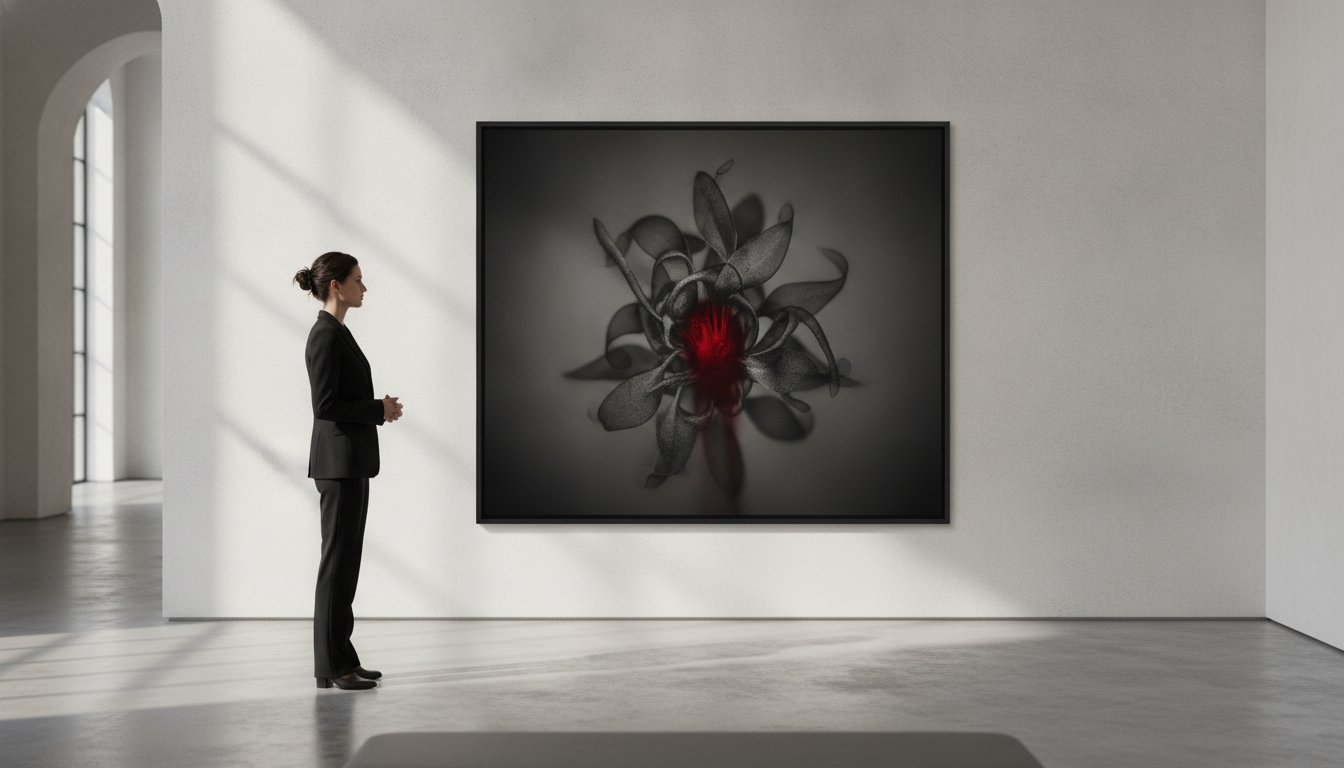
The Dutch floral tradition is legendary. It began with the intricate still lifes of the Golden Age. Today, this heritage is reinterpreted through botanical abstraction. Modern artists move beyond the bouquet. They use macro techniques to explore the architectural details of a single petal or the skeletal structure of a leaf. This approach creates a sense of visual depth. It invites the viewer to look closer. These botanical works are particularly effective in minimalist residential design. They bring a fragment of the natural world into the home, filtered through a sophisticated, artistic lens. The result is a piece that feels both organic and highly structured.
Atmospheric and Minimalist Landscapes
Modern landscapes have moved beyond the horizon. The focus is no longer on geographic specificity. Instead, it’s on light, texture, and mood. These works prioritize the feeling of a place over its location. Black and white photography remains a primary tool for this narrative style. It strips away the distraction of color to reveal the core essence of the scene. The use of negative space is deliberate. It creates a sense of calm and focus within the frame. This minimalist philosophy allows the image to breathe. It offers the collector a moment of reflection. For those seeking to integrate these themes into their own environment, exploring a curated selection of fine art photographic prints can provide the necessary inspiration for a timeless collection.
The Aesthetic Language of Modern Dutch Photographic Art
The visual identity of collectible dutch photography is rooted in a paradox. It balances a deep historical consciousness with a sharp, contemporary edge. While many institutions, including the Nederlands Fotomuseum, preserve the legacy of the documentary tradition, today’s artists are moving toward a more curated, interior-focused aesthetic. This is the language of quiet confidence. It doesn’t scream for attention. It waits to be discovered. This shift represents a move away from the literal toward the conceptual, where the image serves as a vessel for contemplation rather than just information.
Modern Dutch artists are masters of light. They draw directly from the Golden Age painters, utilizing the soft, directional illumination that once defined the canvases of the 17th century. In a digital context, this translates to a sophisticated management of shadows and highlights. It creates a sense of volume and presence that feels almost three-dimensional. This technical precision is paired with a minimalist philosophy. Every element within the frame is intentional. There’s no clutter. This clarity makes the work accessible yet intellectually stimulating. It’s a delicate balance that defines the current generation of photographic creators.
The Convergence of Heritage and Modernity
Innovation in Dutch photography often involves looking backward to move forward. Classical composition remains the skeleton of the work. However, the skin is entirely modern. Digital processes allow for a level of control over color theory that was previously impossible. Artists use specific atmospheric perspectives to create mood. They favor a palette that feels grounded and earthy, yet ethereal. This “elevated minimalism” is a global trend, but the Netherlands remains its epicenter. It’s a style that prioritizes the essence of the subject. It discards the unnecessary to reveal the soul of the image.
Intimacy and Connection in Portraiture
Portraiture has evolved into a bespoke artistic statement. It’s no longer about a simple likeness. Instead, commissioned portraits are conceptual explorations. They aim to capture personal heritage through a minimalist lens. There’s a profound intimacy in these works. The artist creates a dialogue between the subject and the viewer. This connection is often reinforced by the choice of presentation. Minimalist frames and substantial margins allow the portrait to exist in its own space. It’s an invitation to look closer. It’s a way to anchor a personal narrative within the broader context of fine art. The result is a piece that feels both deeply personal and universally resonant.
Building a Portfolio of Original Photographic Artworks
Strategic collecting is a deliberate process. It moves beyond the impulse of a single purchase. To build a cohesive portfolio of collectible dutch photography, you must first identify a core aesthetic anchor. This might be the structured abstraction of botanical forms. It could be the atmospheric silence of a minimalist landscape. By narrowing your focus, you create a narrative thread that links each acquisition. This thread provides a sense of purpose to the collection. It transforms a group of images into a curated body of work that reflects a specific vision.
Due diligence is the hallmark of the sophisticated collector. Research the artist’s exhibition history. Look for representation in established galleries. These are indicators of professional trajectory and market resilience. The edition structure is equally vital. Small runs, typically under ten prints, offer the highest level of scarcity. Larger editions may be more accessible but often see slower appreciation over time. Every detail matters. You should verify the archival standards personally. Ensure the paper and ink combinations meet museum requirements for longevity. This technical rigor protects your investment.
Navigating the Acquisition Process
The path to acquisition varies. Working directly with an artist offers an intimate connection to the creative process. Galleries provide a different layer of security and historical context. Regardless of the channel, prioritize limited edition photographic prints. These works are produced under the artist’s direct supervision. They represent the definitive version of the vision. Ask specific questions about the printing technique. Understand the rarity of the edition before finalizing the purchase. This transparency is essential for long-term value and peace of mind.
Curation for High-End Interiors
Scaling is a critical consideration for modern environments. A large-format print can define a corporate boardroom or a private salon. It acts as an architectural anchor. However, the display requires precision. Lighting must be controlled to prevent UV damage and glare. Framing should be minimalist. It should protect the print without distracting from the visual content. A successful collection feels intentional. It reflects a specific aesthetic philosophy that matures over time. You don’t need to rush. Quality always outweighs quantity. If you’re looking for a starting point, you may view the available exhibition artworks to find a piece that resonates with your curated space.
The Vision of Titus Brein: Timeless Artistic Acquisitions
The work of Titus Brein exists at the intersection of botanical form, atmospheric landscape, and the human narrative. It’s a cohesive exploration of beauty through a minimalist lens. Every piece is an exercise in restraint. By stripping away the superfluous, the core essence of the subject is revealed. This approach defines the studio’s contribution to collectible dutch photography. It’s an invitation to pause. In a world of rapid visual consumption, these works demand a different tempo. They are designed for the contemplative collector who values intellectual depth over sheer volume. The aesthetic is one of quiet authority. It’s a visual language that speaks in whispers but carries significant weight.
Acquiring a piece from the studio is a deliberate act. It’s a commitment to a specific aesthetic philosophy. The collection includes fine art photographic prints that serve as architectural anchors for the modern home or office. These works aren’t merely decorations. They are intentional statements of quality and heritage. Each series is produced with a rigorous adherence to archival standards. This ensures that the visual impact remains unchanged for decades. The goal is to create a legacy. It’s about providing the modern collector with assets that are both emotionally resonant and materially enduring. Every print is a testament to the power of the singular image. It’s a physical anchor in a digital age.
A Curated Journey Through the Visual Image
Quiet confidence is the guiding principle. It’s felt in the subtle gradations of a gray-scale landscape. It’s seen in the intricate detail of a botanical study. Every limited edition print follows museum-quality standards. The process is slow. It’s methodical. This rhythm is passed on to the viewer. Collectors are invited to engage with the art at a reflective pace. There’s no rush to understand. The meaning reveals itself over time, through repeated observation. This is the hallmark of a timeless acquisition. It grows with the environment it inhabits. It offers a space for reflection in a crowded world.
Collaborating on Bespoke Photographic Art
The studio offers a unique path through commissioned portraits. These are not standard likenesses. They are conceptual, exhibition-grade artworks that transform personal narratives into visual poetry. The process is collaborative. It involves deep discussion to identify the symbolic elements of the subject’s history. This results in a bespoke piece that carries significant personal weight. It’s a way to document a legacy through fine art. Every commission is treated with the same rigor as an exhibition artwork. The final print is a singular object of value. For those interested in exclusive acquisitions or private portfolio discussions, the studio is available for private viewings by appointment. It’s a professional and intimate environment designed for the serious appreciation of the image. It allows for a direct connection between the collector and the vision.
Cultivating a Legacy of Visual Excellence
The acquisition of collectible dutch photography is an exercise in intentionality. It requires a move beyond the fleeting image toward the enduring object. We’ve examined how scarcity and edition discipline define market resilience. We’ve analyzed the shift toward a minimalist aesthetic that prioritizes atmospheric depth over literal representation. These works aren’t mere captures. They are architectural anchors for the modern space.
Every acquisition must meet rigorous technical standards. Limited edition prints from Titus Brein are currently exhibited in international galleries. Each piece adheres to museum-quality archival standards to ensure longevity. For collectors seeking a personal narrative, bespoke artistic commissions offer a way to translate private heritage into exhibition-grade art. This professional rigor protects the value of your portfolio.
The journey of a collector is one of refinement. It’s a slow progression toward a cohesive aesthetic vision. To begin or expand your collection with works of quiet authority, Explore the Curated Portfolio of Titus Brein. Invest in a legacy that values the profound over the polished. Your vision deserves a frame that endures.
Frequently Asked Questions
What makes Dutch photography highly collectible?
The value lies in the synthesis of a centuries-old visual heritage and modern conceptual innovation. Dutch artists often build upon the lighting techniques of the Golden Age while embracing contemporary minimalism. Technical mastery, combined with a strong institutional support system in the Netherlands, ensures that collectible dutch photography remains a resilient asset in the global market. It’s a medium that respects history while pushing aesthetic boundaries.
How do limited edition numbers affect the price of Dutch art?
Scarcity is the primary driver of value. A lower edition number, such as a run of five or seven, typically commands a higher price because the availability is strictly finite. As an edition nears its completion, the price often increases to reflect the diminishing supply. This structure protects the collector’s investment. It ensures the work cannot be mass-produced, maintaining its status as a rare and tangible asset.
Can I commission a bespoke fine art portrait in the Netherlands?
Yes, bespoke commissions are a specialized offering within the Dutch fine art market. These are conceptual collaborations rather than standard photographic sittings. The process involves translating a personal or corporate narrative into a museum-quality artwork. It is a way to acquire a singular piece that carries both personal heritage and professional artistic value. These works are treated with the same rigor as an exhibition piece.
What are the current trends in Dutch floral photography?
The current trend favors botanical abstraction over literal representation. Artists are moving toward macro perspectives that highlight the architectural textures of plants. There’s a preference for muted palettes and dramatic lighting that evokes the mood of traditional still lifes while maintaining a modern, minimalist edge. It’s about capturing the essence of the form rather than a simple bouquet. This approach suits contemporary, high-end interiors.
How do I verify the authenticity of a limited edition photographic print?
Authenticity is confirmed through the artist’s signature and a formal certificate of authenticity. This document should detail the edition number, the printing technique, and the archival materials used. For collectible dutch photography, this provenance is essential. It acts as a legal and historical record. It anchors the work within the artist’s official body of work, ensuring its legitimacy for future resale or gallery exhibition.
Is photography a good investment for new art collectors?
Photography is an accessible entry point due to its structured market and clear edition tiers. It has shown significant growth in recent years, outperforming many traditional media in terms of market share increase. While no investment is without risk, limited edition works from artists with a strong exhibition history offer a tangible asset. These pieces often appreciate as the artist’s career progresses and editions sell out.
What is the difference between museum-quality and gallery-quality prints?
Museum-quality prints adhere to the most rigorous archival standards for longevity. This involves using acid-free cotton rag papers and mineral-based pigment inks that resist fading for over a century. Gallery-quality is a broader term that suggests a high standard of presentation. However, museum-quality specifically guarantees the material permanence required for institutional collections. It’s the gold standard for serious collectors who value heritage and durability.
Why is minimalism a dominant trend in contemporary Dutch art?
Minimalism reflects a cultural preference for clarity and spatial breathing room. In the Netherlands, this aesthetic serves as a reaction against digital saturation. By utilizing negative space and restrained compositions, artists create a sense of calm and focus. It’s a philosophy that allows the viewer to project their own reflection onto the work. This makes the experience more intimate and ensures the artwork remains timeless across changing trends.